What actually sells fastest on Vinted
· 6 min read
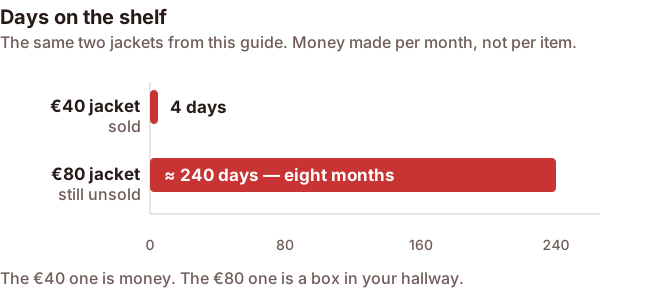
The instinct when sourcing is to look for the highest resale value. It's the wrong metric. A €40 jacket that sells in four days is worth far more than an €80 one that sits for eight months, because the first one is money and the second one is a box in your hallway.
What sells fastest on Vinted?
Recognisable mid-range brands in good condition, basics in neutral colours, in-season outerwear, sportswear and outdoor labels, genuine deadstock at a clear discount to retail, and distinctive period vintage. What they share is broad demand against supply that isn't overwhelming. Judge an item by its sell-through rate, not by its resale value.
What is sell-through rate, and why does it matter?
Sell-through rate is the share of listings of an item that actually sell in a given period. You can approximate it in a Vinted search: scan the comparable results and count how many have sold versus how many are still sitting there. If four of five comparable items sold, that's a fast category. If one of thirty sold, no price will fix it.
Do this before you buy, not after. Thirty seconds of checking saves you from inventory that ties up cash and shelf space indefinitely.
Money made per month beats money made per item. Always.
Which items tend to move quickly?
- Recognisable mid-range brands in good condition — the sweet spot where demand is broad and supply isn't overwhelming.
- Basics in neutral colours: plain jumpers, well-cut jeans, simple coats. Boring sells.
- Outerwear in the right season. A coat in late September moves in days.
- Sportswear and outdoor brands, which hold demand year-round.
- Anything genuinely deadstock or new with tags, at a clear discount to retail.
- Distinctive vintage with a period look — buyers search for it specifically.
Which items tend to sit unsold?
- Fast-fashion basics with no brand pull. Enormous supply, near-zero search demand.
- Formalwear. Occasional need, very specific fit, slow.
- Heavily branded pieces from a trend that has passed.
- Anything with visible wear at a price that assumes there isn't any.
- Very common sizes of very common items — you're competing with hundreds of identical listings.
- Out-of-season anything. Sandals in November sit until May.
Season is a lever, not a constraint
Buying out of season and listing in season is the closest thing to free money in resale. Winter coats are cheapest in March and sell best in October. Summer dresses are cheapest in September. If you have storage, that gap is pure margin.
If you don't have storage, at least don't fight it — listing a wool coat in July means it either sits for three months or sells cheap. Hold it six weeks and relist.
Check the label, not the rack
When sourcing in person — a charity shop, a Humana, a car boot — the fastest signals are on the label and in the fabric:
- 1Fibre content. Wool, cashmere, silk, linen and real leather hold value; polyester blends rarely do.
- 2Country of manufacture. Older "Made in Italy", "Made in Japan" and "Made in Portugal" labels often signal a higher line.
- 3Construction. Lined jackets, French seams, real buttonholes and heavier hardware indicate a garment built to last.
- 4Label design. Brands change their labels over time, and older designs often identify more collectable eras.
Bundle the tail
Every inventory has a long tail of items worth €3–5 that individually aren't worth the twenty minutes of photographing, writing and packing. Grouping them — five basic tops as one lot, a set of similar accessories — converts dead stock into one sale at one shipping cost.
It also clears physical and mental space, which is worth more than the euros. Inventory you're avoiding looking at is inventory that isn't earning.
Track what your own numbers say
General advice is a starting point; your data beats it. Keep a simple record of what you paid, what you sold it for, and how many days it took. After thirty or forty sales you'll see your own patterns — which brands move for you, which categories you're consistently wrong about, which price bands sell fastest in your market.
Days-to-sell is the column most people don't track and the one that changes decisions the most.
The short version
- Check sell-through before buying, not resale value.
- Boring neutral basics from known brands move fastest.
- Season is a lever — buy out of it, sell into it.
- Read the fibre content and the construction.
- Bundle anything under about €5.
- Track days-to-sell and trust your own numbers.
ListQuick is independent and is not affiliated with, endorsed by, or connected to Vinted. Vinted is a trademark of its respective owner and is referred to here only to describe where this guide applies.