How to measure clothes for Vinted listings
· 4 min read
Sizing is the biggest unresolved risk in buying clothes on Vinted. A label saying M is close to meaningless across brands, decades and countries, and buyers know it. Measurements are what convert a browser into a buyer, and they are also your defence when someone claims an item wasn't as described.
How do you measure clothes for a Vinted listing?
Lay the garment flat, smooth it out without stretching it, and measure straight across in centimetres. Tops need pit to pit, length, shoulder to shoulder and sleeve. Bottoms need waist, hips, inseam and rise. Write the words "laid flat" beside the numbers so nobody doubles a figure that was already the full width.
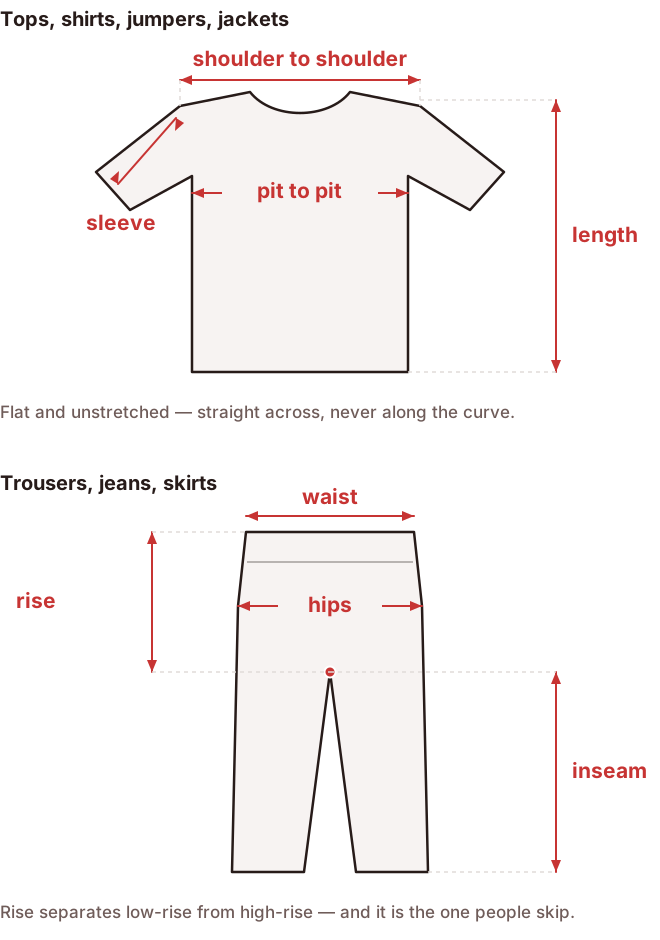
What does "laid flat" mean, and why say it?
Lay the item on a flat surface, smooth it out, and don't stretch it. Measure straight across in a line, not following the curve of the fabric. Use centimetres — they're the standard on Vinted across Europe and avoid the fraction-rounding errors inches introduce.
Then write the words "laid flat" in the listing. Without them, a buyer may assume you've given a circumference and double a number that was already the full width, or halve one that wasn't. It is a one-off two-word habit that prevents a recurring misunderstanding.
Which measurements does each garment need?
| Garment | Take these | The one people skip |
|---|---|---|
| Tops, shirts, jumpers, jackets | Pit to pit, length, shoulder to shoulder, sleeve | Shoulder to shoulder |
| Trousers, jeans, skirts | Waist, hips, inseam, rise | Rise |
| Dresses | Bust, waist, hips, total length | Stretched waist range |
| Shoes | Insole length, plus every marked size | Insole length |
Tops, shirts, jumpers, jackets
- Pit to pit — across the chest from one armpit seam to the other. The single most requested measurement.
- Length — from the highest point of the shoulder straight down to the hem.
- Shoulder to shoulder — across the back between the two shoulder seams.
- Sleeve — from the shoulder seam to the cuff.
For anything oversized or cropped, length matters more than usual — it's the dimension that decides whether the fit the buyer has in mind actually works. For jackets, add whether it's lined, because that changes how it fits over other layers.
Trousers, jeans, skirts
- Waist — across the top of the waistband, flat. Say whether it's stretchy.
- Hips — across the widest point, usually around 20cm below the waistband.
- Inseam — from the crotch seam down the inside leg to the hem.
- Rise — from the crotch seam up to the top of the waistband at the front.
- Leg opening — across the hem, for anything where the cut is the point.
Rise is the one people skip and shouldn't. It's what separates low-rise from high-rise in practice, and vintage denim sizing is almost impossible to judge without it.
Dresses
Bust (pit to pit), waist at the narrowest point, hips at the widest, and total length from the shoulder. If the waist is elasticated, give both the relaxed and gently stretched measurement — that range is genuinely useful and almost nobody provides it.
Shoes
Give the marked size, the marked size in every system printed on the label, and the insole length in centimetres — heel to toe, measured inside the shoe or on the removed insole. Shoe sizing varies enough between brands that insole length is the only figure a buyer can actually compare against a shoe they already own.
Tell buyers to measure a garment they already own and love, then compare. It's the most useful sizing advice there is.
Where should the measurements go in the listing?
Put measurements in the description as a short block, on their own lines, near the end. Not buried mid-paragraph, and not only in a photo — a picture of a tape measure looks thorough but can't be read at a glance on a phone, and it can't be searched.
A format that reads cleanly: "Pit to pit 54cm · Length 68cm · Sleeve 61cm · Laid flat". Short, scannable, unambiguous.
The short version
- Laid flat, unstretched, in centimetres — and say "laid flat".
- Tops: pit to pit, length, shoulders, sleeve.
- Bottoms: waist, hips, inseam, rise.
- Shoes: insole length, plus every marked size.
- Put them in the text, not only in a photo.
ListQuick is independent and is not affiliated with, endorsed by, or connected to Vinted. Vinted is a trademark of its respective owner and is referred to here only to describe where this guide applies.